The Pantheon, Ikoyi, Achieves LEED Platinum Certification in Nigeria
Adeola Omolewa · 6 May 2026 · 9 min read
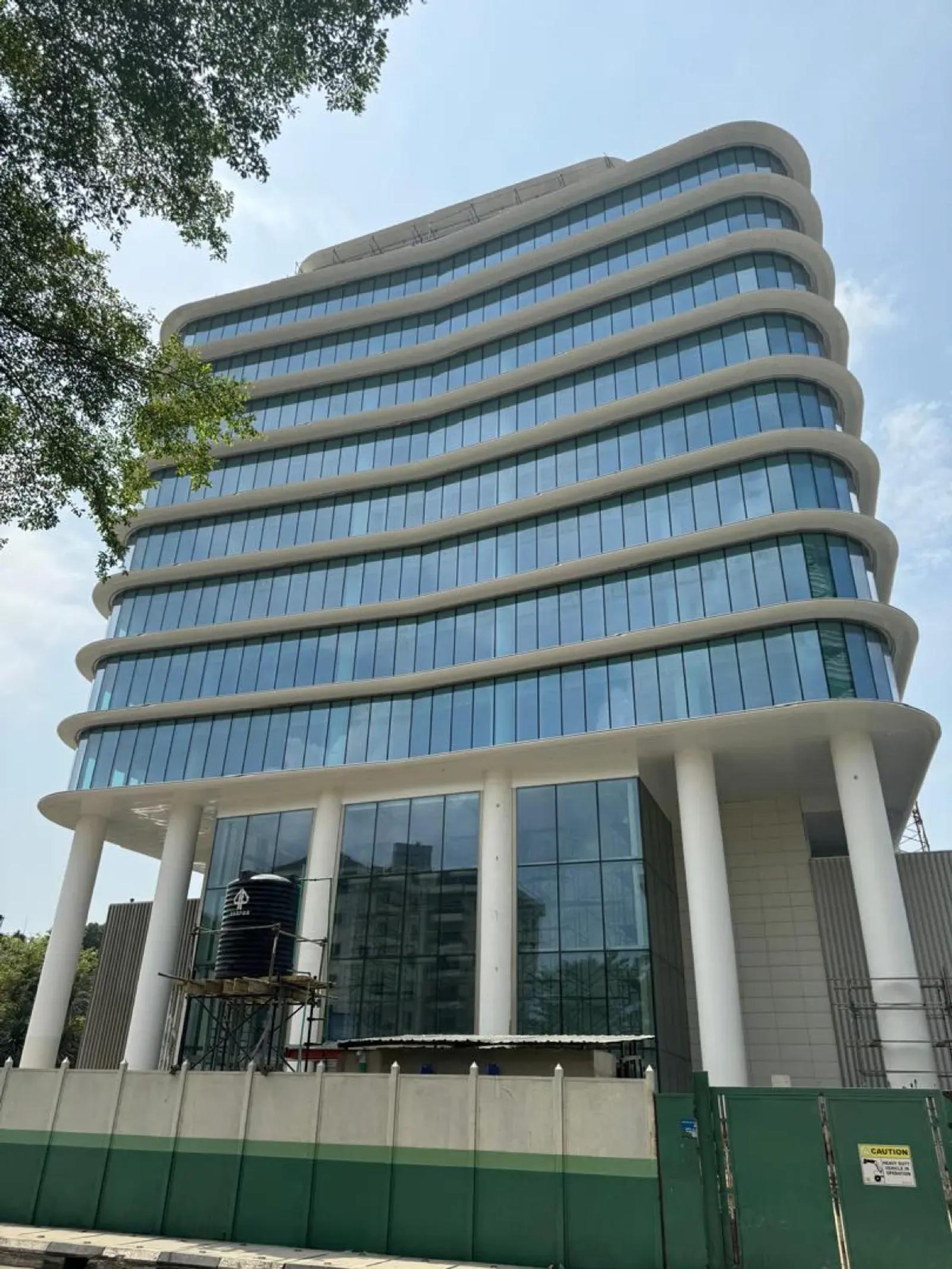
Litedares Africa is proud to announce that The Pantheon , a commercial office development in Ikoyi, Lagos, has achieved LEED v4 BD+C Core & Shell Platinum certification. The highest rating level under the world’s…
Litedares Africa is proud to announce that The Pantheon, a commercial office development in Ikoyi, Lagos, has achieved LEED v4 BD+C Core & Shell Platinum certification. The highest rating level under the world’s most recognized green building rating system. Litedares Africa served as the green building consultant on the project, leading the certification strategy from early design through to the certification award.
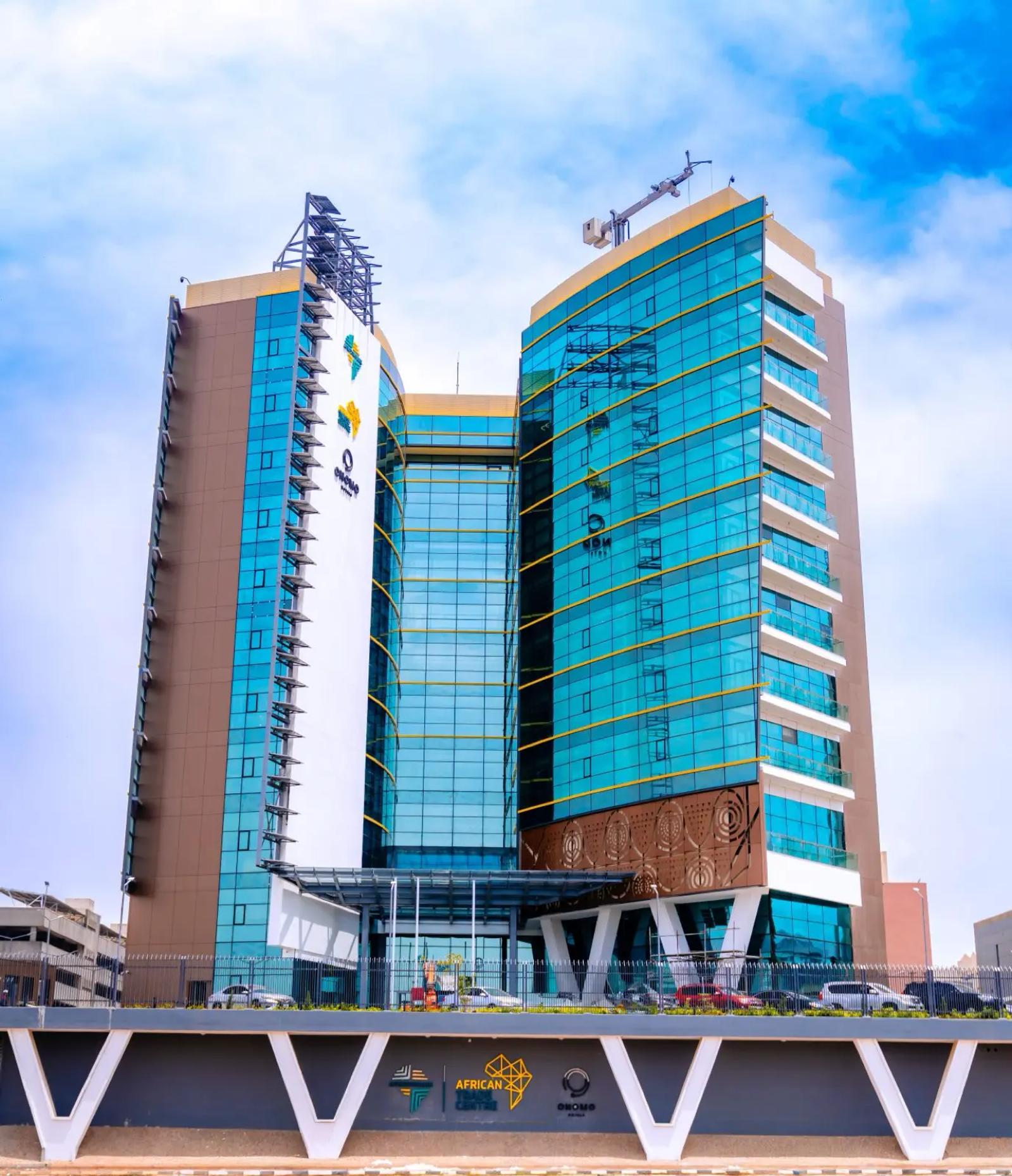
LEED Platinum certification in Nigeria remains rare. Across the entire country, only two buildings have now reached this level: the Afreximbank Abuja African Trade Centre, which became Nigeria's first LEED Platinum building in November 2025, and The Pantheon, which joins it at this standard. For Litedares Africa, this is not just a project milestone. It is a demonstration of what LEED Platinum certification in Nigeria actually demands. And what it produces when every design decision is made with that target in mind.
Below is a full breakdown of the strategies, systems, and performance metrics that earned The Pantheon its rating.
What Is LEED Platinum Certification and Why Is It Difficult to Achieve in Nigeria?
LEED (Leadership in Energy and Environmental Design) is a green building rating system developed by the U.S. Green Building Council and used in over 180 countries. LEED certification is awarded at four levels: Certified, Silver, Gold, and Platinum. Buildings are scored across categories, including energy efficiency, water use, materials, indoor environmental quality, sustainable site development, and location and transportation.
LEED Platinum certification is the highest level. It is not a minor upgrade from Gold. It requires a building to demonstrate exceptional performance across nearly every category simultaneously. Most projects that pursue LEED target Gold. Achieving LEED Platinum certification, particularly under the stricter LEED v4 framework, demands that sustainability is embedded into the project from the earliest design decisions, not added later as a feature.
In Nigeria, where construction infrastructure constraints are real, and sustainability has historically been treated as secondary to cost and speed, achieving LEED Platinum certification is a serious undertaking. The Pantheon is only the second building in the country to get there.
The Building at a Glance
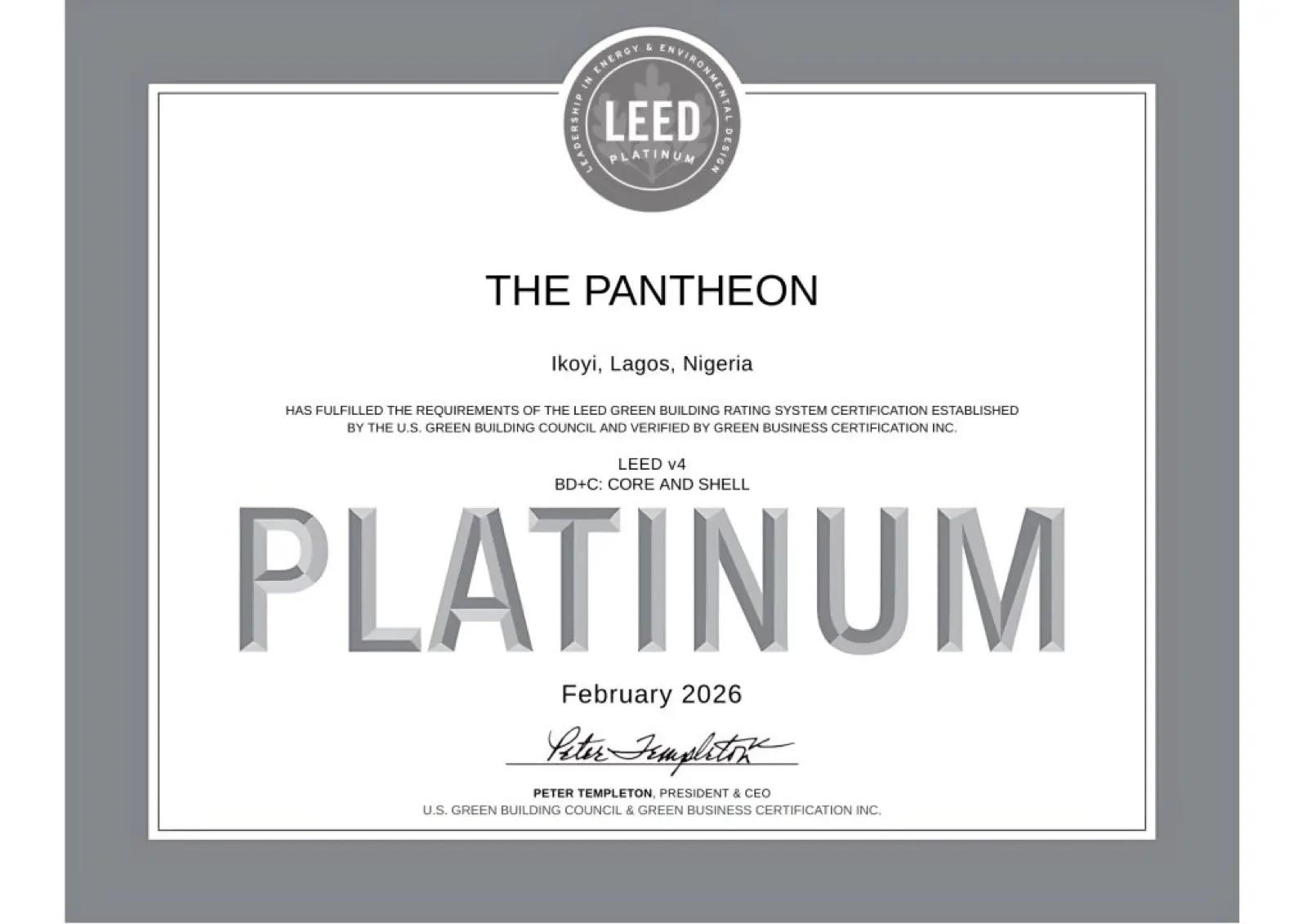
The Pantheon spans 14,050 square metres in Ikoyi, Lagos. It consists of one basement level, a ground floor, two parking levels, and eight typical office floors, along with meeting rooms, waiting areas, event spaces, and storage.
Litedares Africa was engaged as the green building consultant from the early stages of the project, advising on certification strategy, guiding design decisions across every LEED credit category, coordinating documentation, and managing the submission process with the Green Building Certification Institute (GBCI). The LEED Platinum target was set at the start, which is the only way to achieve it. Sustainability decisions made late in a project rarely earn Platinum. The ones made at the concept stage do.
Here is what that early commitment produced.
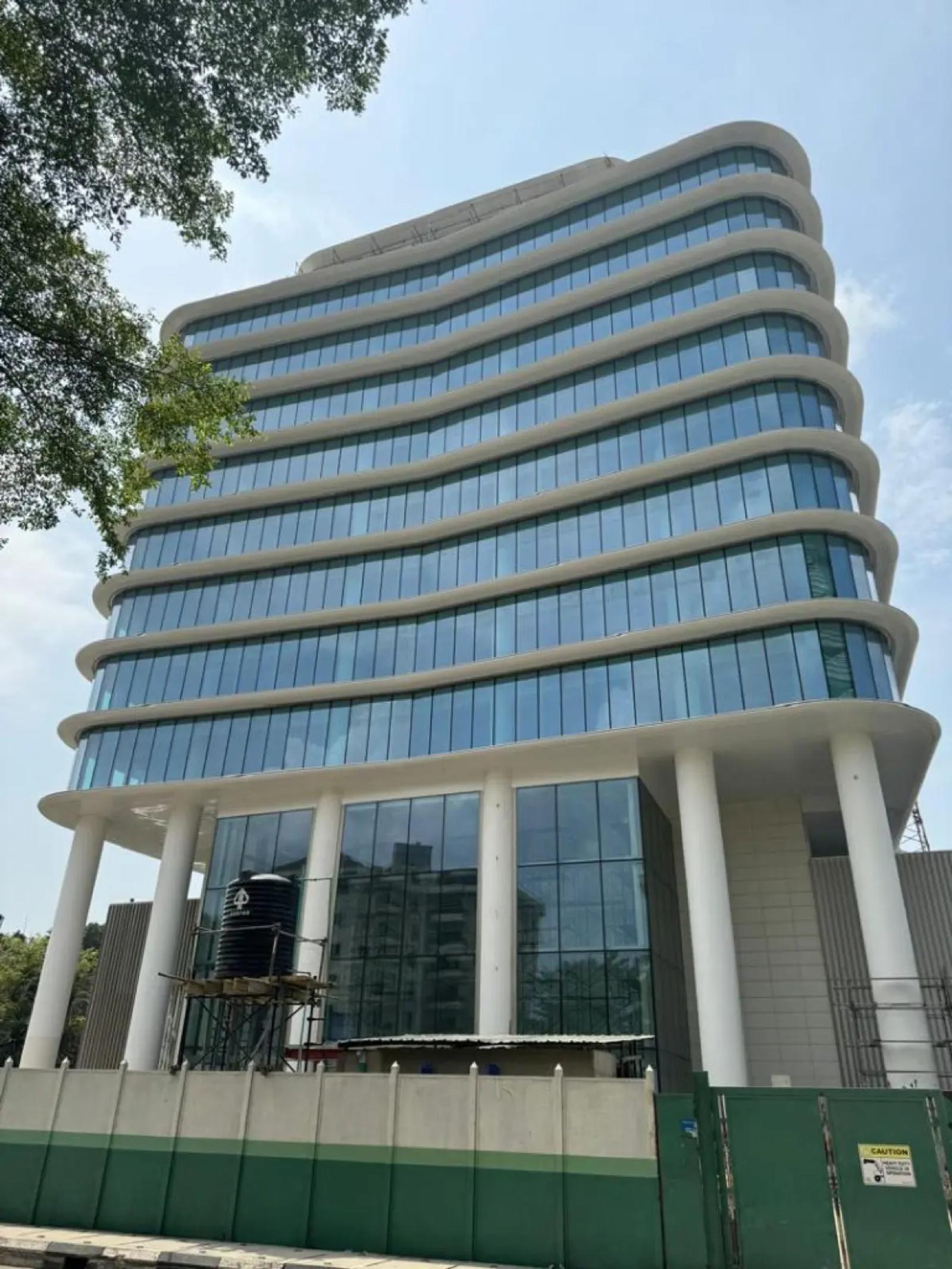
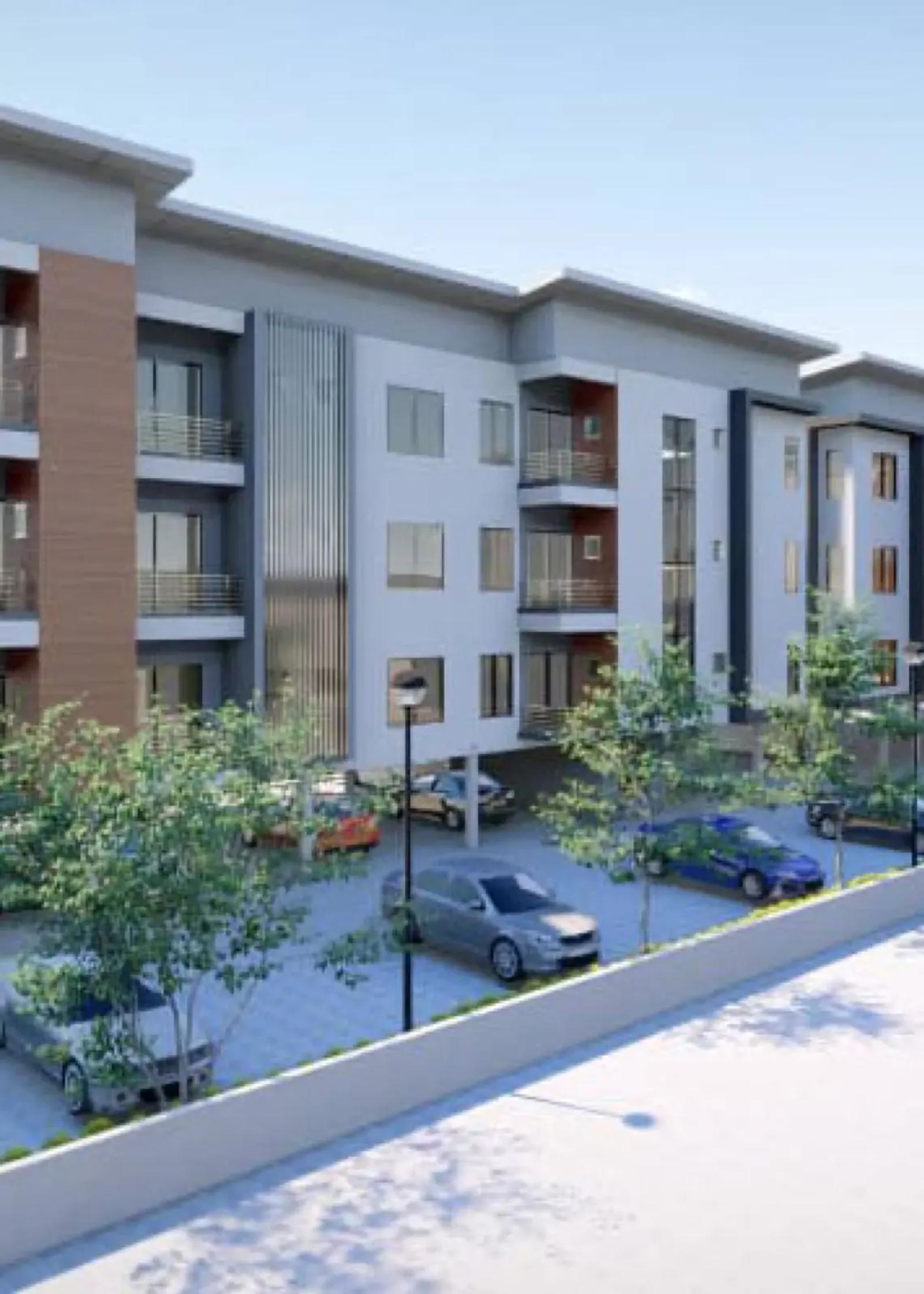
The Pantheon Ikoyi Lagos LEED v4 Platinum pre-certified sustainable commercial office building exterior
Energy Efficiency: 30.63% Better Than the Baseline
The building's energy performance exceeds Nigeria's standard baseline by 30.63%. That figure comes from layering multiple strategies rather than relying on any single technology.
The building orientation was designed to take advantage of natural light and reduce direct heat gain. High-performance glazing controls solar radiation without blocking daylight. LED lighting runs throughout the building. The HVAC system uses refrigerants that contain no CFCs or HCFCs, both of which damage the ozone layer and have been phased out under global agreements. However, compliance is still inconsistent across African construction.
On-site renewable energy systems contribute 7.22% of total energy consumption. Advanced energy metering installed throughout the building allows facility managers to track usage in real time. And identify inefficiencies before they compound. Over 90% of regularly occupied spaces rely on natural daylight rather than artificial light. This reduces both electricity consumption and glare-related discomfort for occupants.
Water Conservation: 45% Reduction Indoors, Zero Outdoors
Water management is one of the most practical sustainability challenges in Lagos, where supply inconsistency is a daily reality for most commercial buildings. The Pantheon addresses this across three layers.
Inside the building, low-flow faucets, dual-flush toilets, and water-efficient urinals reduce potable water consumption by 45% compared to a standard building of the same size. Outside, the landscaping uses only native and drought-tolerant species maintained through drip irrigation. This means the building uses zero potable water for outdoor purposes. That is a 100% reduction in outdoor water demand.
The third layer is a rainwater harvesting system with a 144 cubic metre underground tank. Collected rainwater is used for landscaping and other non-potable applications. The system is also designed to manage the 90th percentile of rainfall events on-site through low-impact development techniques. This means even in heavy rain, very little runoff leaves the site.
Sustainable Transport Facilities
The building includes Electric Vehicle Supply Equipment (EVSE) for tenant and visitor vehicles, dedicated short-term and long-term bicycle storage, and on-site shower and changing facilities for employees who cycle to work. For a city where active commuting has historically been treated as impossible, this infrastructure is a meaningful investment in changing behavior.
The site's location in Ikoyi also contributes to its transport credentials, high walkability, access to public transit routes, and proximity to a mix of uses, all of which reduce the need for private car travel.
Reducing the Urban Heat Island Effect
Lagos is a dense, hot city, and buildings contribute significantly to the urban heat island effect. It is where dark surfaces absorb heat and raise ambient temperatures in surrounding areas. The Pantheon counters this through roofing coated with High Solar Reflectance Index (SRI) paint, achieving an SRI value above 82, which is well above the LEED threshold. Driveways and surface parking use light-colored pavements and open-grid grass pavers, both with high SRI values, so even hard surfaces reflect rather than absorb heat.
Native vegetation covers 18% of the site, with more than 30% of the vegetated open space accessible to building occupants for breaks and recreation.
Indoor Environmental Quality
This is the area that gets the least attention in discussions about green buildings. And arguably matters most to the people who work in them.
The Pantheon delivers 100% outdoor air supply, exceeding the minimum ventilation performance standard set by ASHRAE 62.1-2010. The air is filtered through MERV-rated systems that remove fine particles and pollutants before they enter occupied spaces. All adhesives, paints, coatings, flooring systems, and composite wood products used in the building meet low-emission standards, which keep volatile organic compounds out of the indoor environment.
More than 75% of workspaces have access to natural daylight and outdoor views. We enforce a strict no-smoking policy throughout the building. Entryway pollution control systems prevent outdoor pollutants, dust, vehicle exhaust, and particulate matter from being tracked in on shoes and clothing. Janitor closets are enclosed separately from occupied spaces to prevent chemical fumes from reaching occupants.
The research on indoor air quality and workplace productivity is consistent. Better air, more light, and thermal comfort all reduce absenteeism and improve focus. For tenants evaluating office space in Lagos, these factors have a direct economic impact.
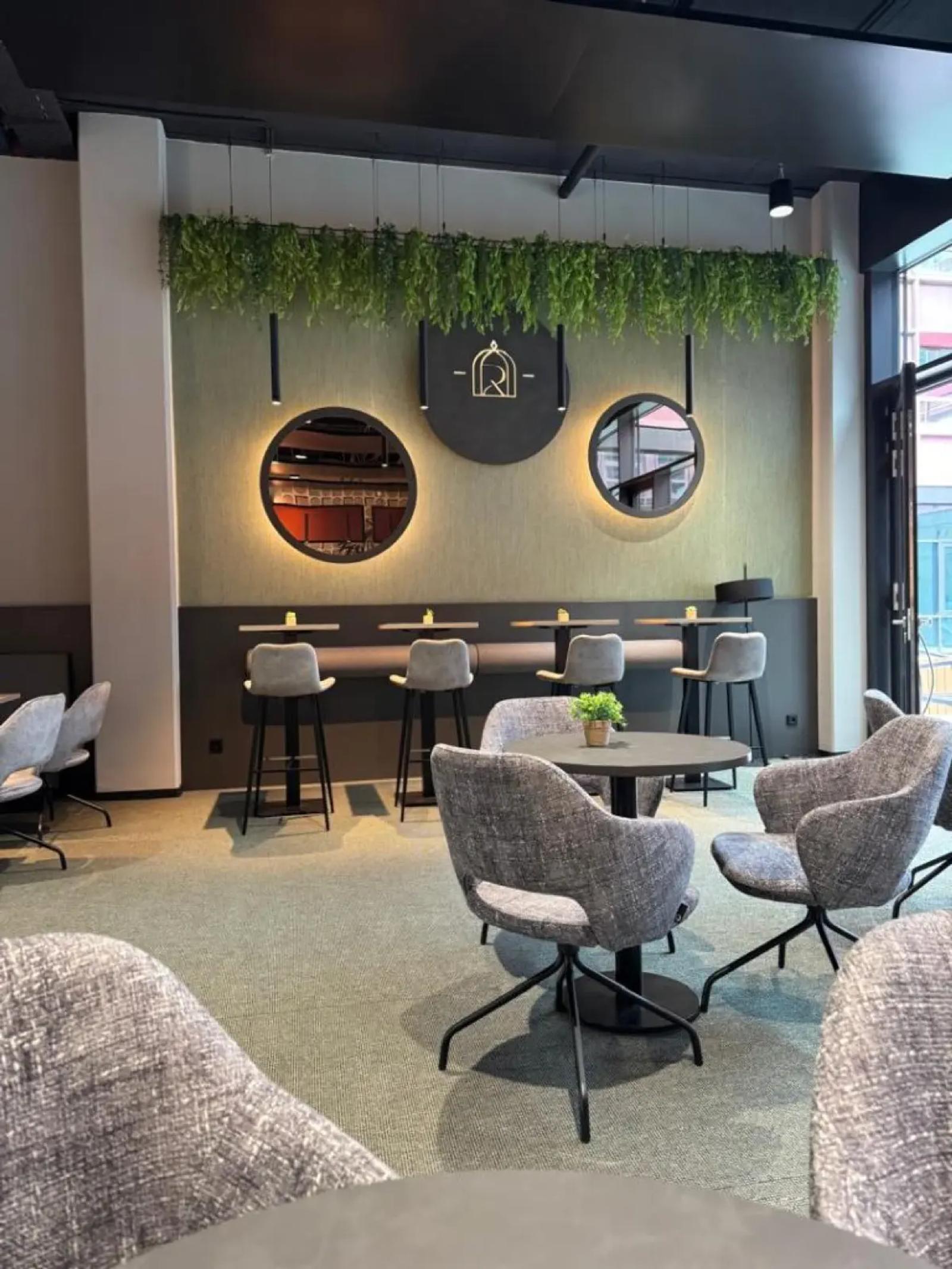
The Pantheon Ikoyi Lagos LEED v4 Platinum pre-certified sustainable commercial office building exterior
Waste Management
The building includes dedicated facilities for ongoing collection and separation of recyclable materials, paper, cardboard, plastic, metals, and also, glass. This infrastructure supports tenants in maintaining responsible waste practices throughout the building's operational life, not just at construction.
What This Means for Green Building in Lagos
The Pantheon sits alongside Afreximbank's Abuja African Trade Centre as one of only two LEED Platinum buildings in Nigeria. The gap between those two buildings and the rest of Nigeria's commercial stock is wide. But it is narrowing, and the existence of certified buildings like The Pantheon gives developers, investors, and tenants a concrete reference point.
For developers: LEED certification is increasingly expected by multinational tenants, development finance institutions, and ESG-conscious investors. A certified building commands higher rents, lower vacancy rates, and longer leases because tenants who understand what they are getting do not leave easily.
For tenants: The case is about operating costs and staff wellbeing. A building that uses 30% less energy than the baseline is a building with lower utility bills. A building where 90% of spaces are daylit and where air quality meets international standards is a building where people feel better at work.
For the city: every LEED Platinum building that gets built in Lagos makes the next one easier to justify, easier to finance, and easier to design. The Pantheon is not the end of the story; it is the kind of project that moves the standard forward.
Conclusion: A Track Record, Not a One-Off
The Pantheon is not a concept or a proposal. It is a completed design, reviewed, scored, and certified at Platinum, the highest tier of LEED certification. Every number in this article, the 30.63% energy improvement, the 45% indoor water reduction, and the 100% outdoor air supply, is documented against international benchmarks, not estimated.
What makes this achievement significant beyond the building itself is the context. Nigeria has two LEED Platinum buildings. Litedares Africa served as the green building consultant on both of them, the Afreximbank Abuja African Trade Centre and The Pantheon, Ikoyi. That is not a coincidence or a fortunate run. It is the result of a consultancy that has built deep expertise in what LEED Platinum certification in Nigeria actually requires, the documentation, the design coordination, the client conversations, and the commitment to see it through.
For developers and clients considering LEED certification on their next project, that track record is the most relevant thing in this article.
Are you planning a LEED certification project in Nigeria?
Litedares Africa provides end-to-end green building consulting across Nigeria and West Africa from early-stage feasibility and LEED target-setting through to certification support and post-occupancy performance review. Our work covers LEED, EDGE, and WELL standards across commercial, residential, and also, mixed-use developments.
Whether you are exploring LEED certification for the first time or working toward a specific rating on an existing project, we are happy to start that conversation. Contact us
Frequently Asked Questions (FAQ)
What is LEED Platinum certification, and how does it work in Nigeria?
LEED Platinum certification is the highest tier under the LEED (Leadership in Energy and Environmental Design) rating system, administered globally by the U.S. Green Building Council. In Nigeria, projects pursuing LEED Platinum certification are scored across energy, water, materials, indoor air quality, site sustainability, and transport. Full certification is awarded after construction is complete and the building's performance has been independently reviewed and verified by the Green Building Certification Institute (GBCI).
How many buildings have achieved LEED Platinum certification in Nigeria?
As of 2025, two buildings in Nigeria have achieved LEED Platinum certification. The Afreximbank Abuja African Trade Centre, Nigeria's first, was certified in November 2025, and The Pantheon, Ikoyi, Lagos, which also holds LEED v4 Platinum certification. Litedares Africa served as the green building consultant on both.
Where is the Pantheon located?
The Pantheon is located in Ikoyi, Lagos, within the city's central business district.
How much energy does the Pantheon save compared to a standard building?
The Pantheon exceeds Nigeria's standard energy performance baseline by 30.63%, achieved through passive design strategies, high-performance glazing, LED lighting, efficient HVAC systems, and on-site renewable energy, thus contributing 7.22% of total consumption.
Who managed the LEED Platinum certification process for The Pantheon?
Litedares Africa, led by Arch. Emmanuel Falude, handled the LEED Platinum certification consulting. Arch. Emmanuel Falude is a LEED AP BD+C and LEED Faculty with over a decade of green building experience across Nigeria and West Africa. Litedares Africa provides end-to-end LEED, EDGE, and WELL certification consulting for commercial, residential, and also, mixed-use developments.