Climate Change in Africa: Why Nigerian Buildings Keep Flooding
Adeola Omolewa · 8 July 2026 · 7 min read
Every year, the same debate follows blocked drains, government failure, and poor infrastructure. All of those things are real. But they are not the whole story.
Contents
Every year, the same debate follows blocked drains, government failure, and poor infrastructure. All of those things are real. But they are not the whole story.
The whole story is this: climate change in Africa is intensifying Nigeria's floods, and the country's buildings, its cities, and its built environment were not designed for what is now coming. They were built for a climate that no longer exists.
"This is something we foresaw. We saw it coming. And if nothing is done, this is just the start." - Umar Mohammed, Director General, Nigeria Hydrological Services Agency (NiHSA), July 2026
What Is Actually Happening Right Now
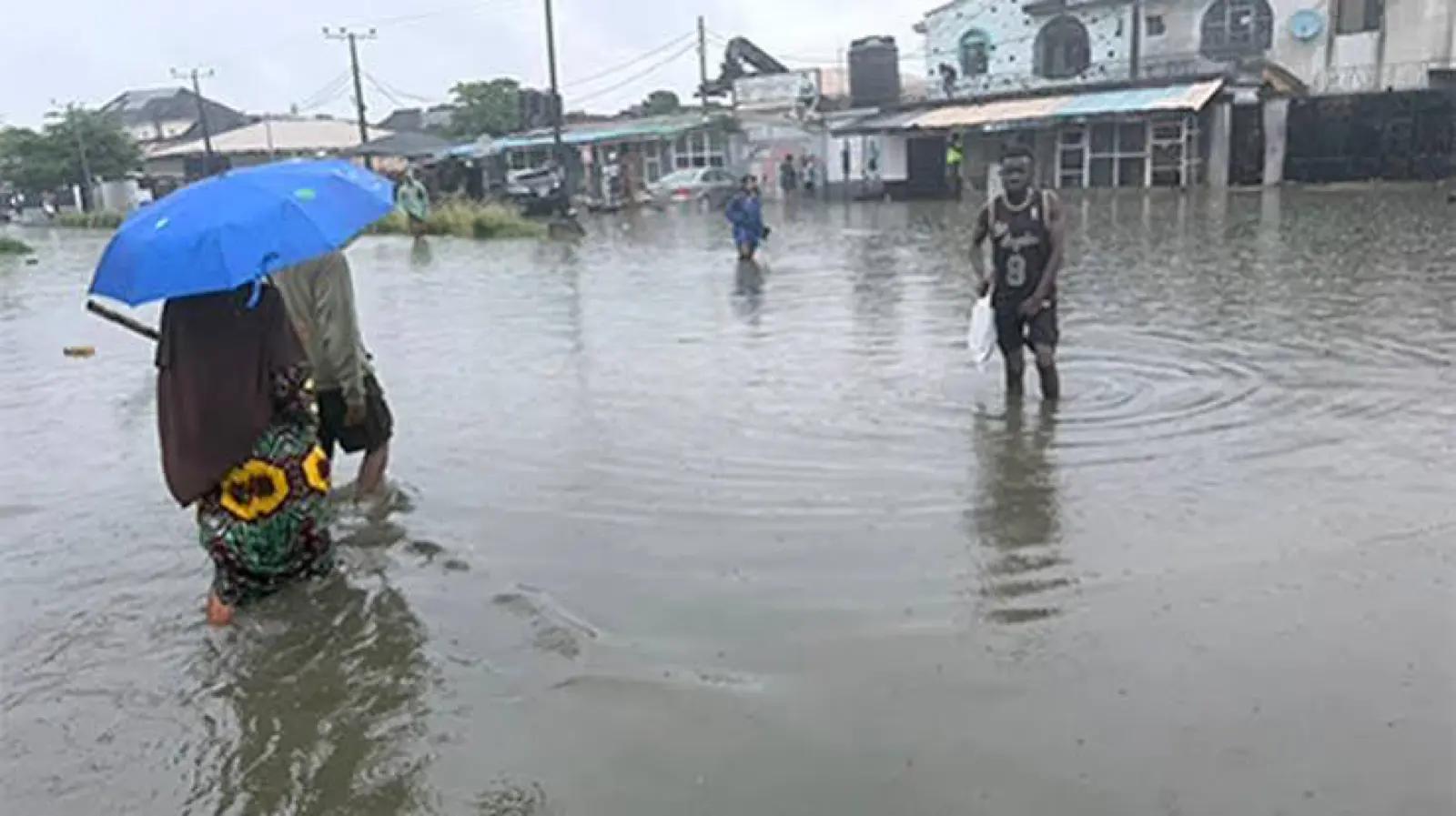
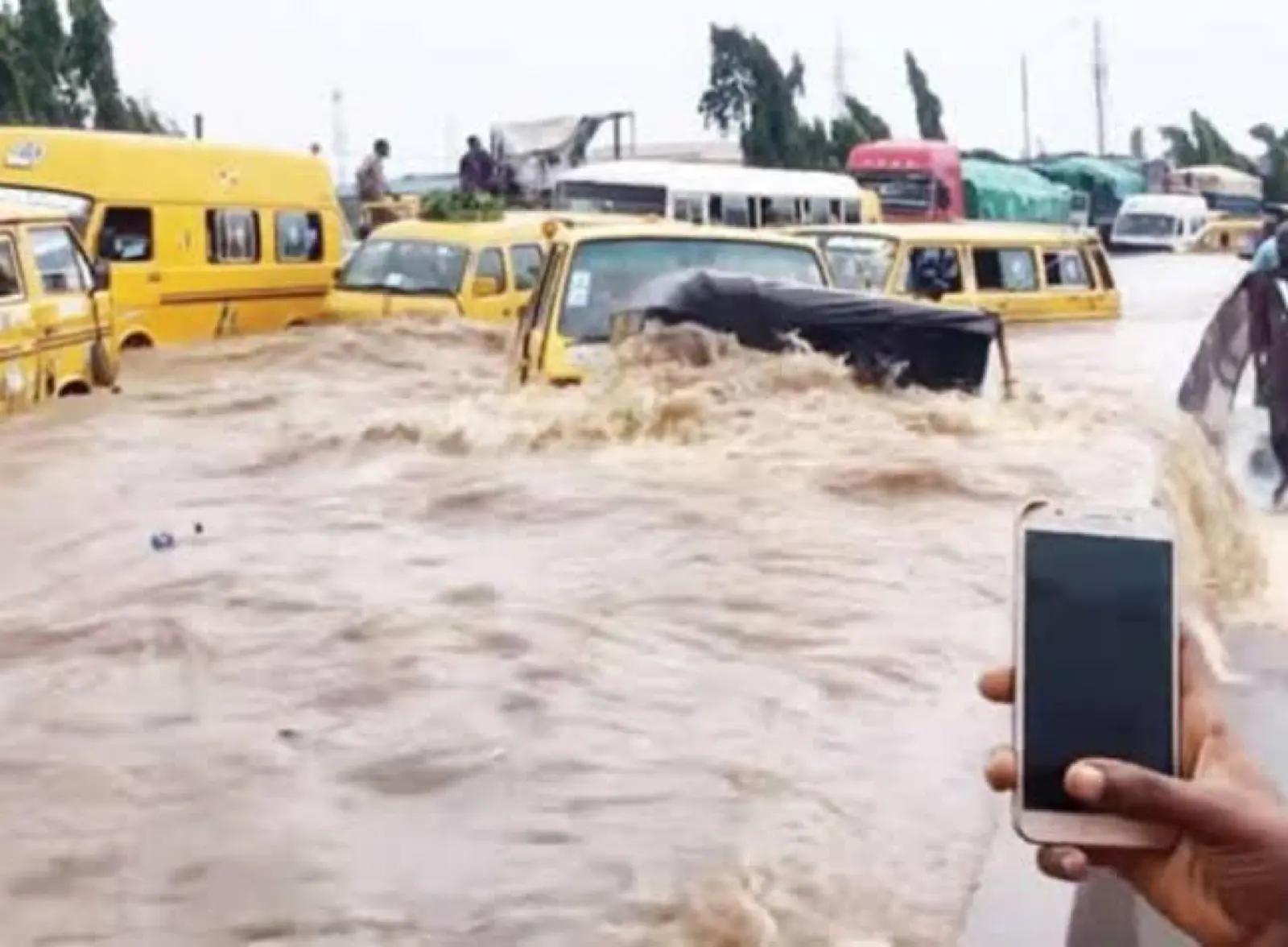
On June 29, 2026, a multi-hour downpour swept across Lagos. By the time it was done, both the mainland and the island were submerged. Areas including the Lagos-Oshodi Expressway, Lekki-Epe Expressway, Victoria Island, Agege, Ikeja, Oworonsoki, Gbagada, Yaba, and the Lagos Mainland Local Government Area were all heavily flooded.
From Gbagada to Chevron, Agungi, Ajiran, Egbeda, Ikola, Shomolu, Oshodi, Surulere, and Ikorodu, streets became rivers as hours of relentless rainfall overwhelmed drainage systems. Motorists abandoned vehicles. Residents used makeshift canoes to navigate their own neighborhoods.
"That Sunday was so crazy. I couldn't make it to church. Everywhere I turned was flooded. When I got to my apartment, the flood started coming in too. I've never experienced this kind of thing before in Gbagada, never."
Bimpe Adeoti, Gbagada resident, June 2026
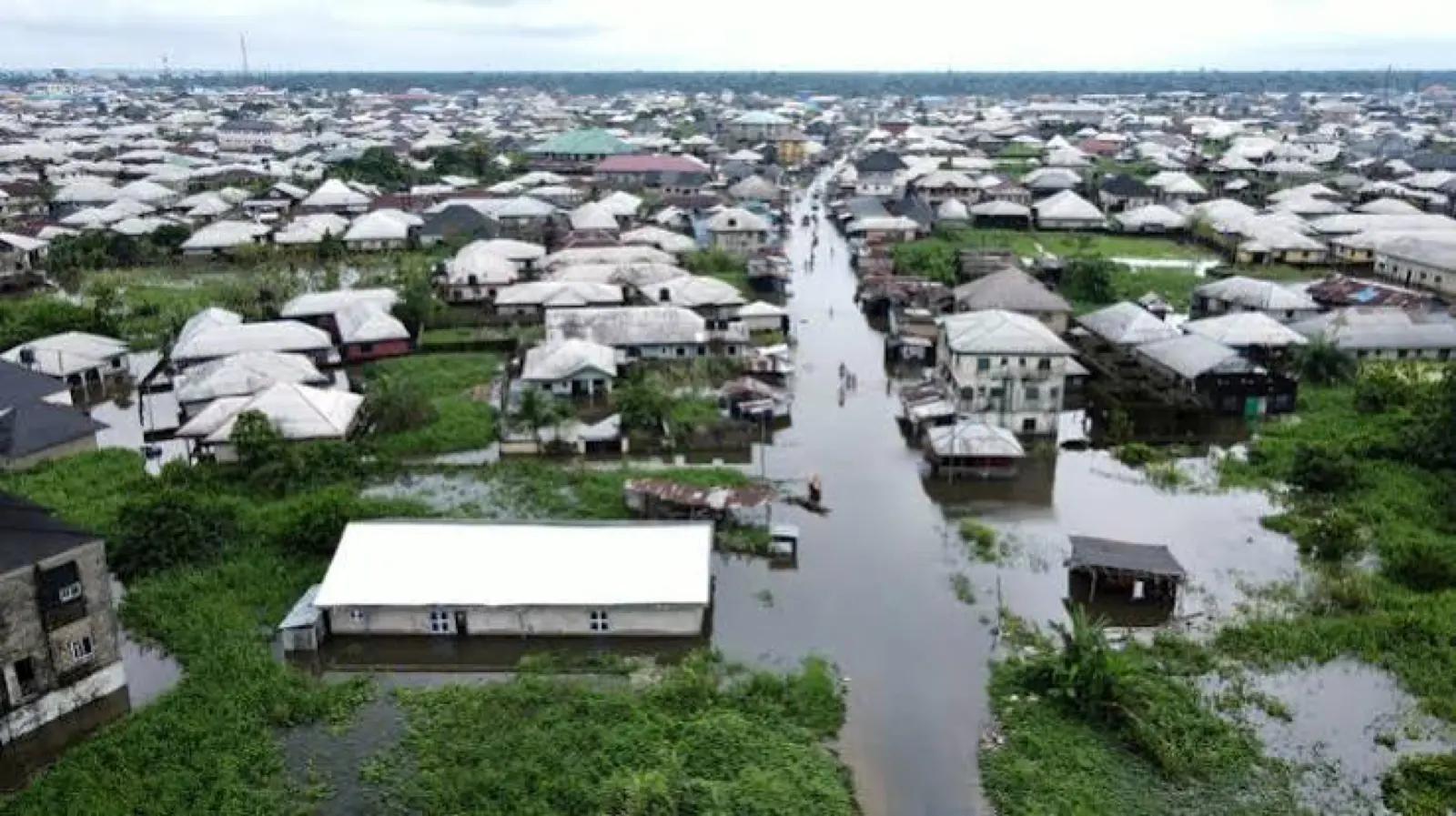
And Lagos is not alone. This is a national crisis. The Federal Government has placed 33 states and the FCT on high flood alert for 2026, warning that 14,118 communities across 266 local government areas face a high risk of flooding.
NIHSA's Director General warned, "As we speak now, with the flooding happening, if nothing is done, this is just the start of the rainy season. We're expecting it to be worse around August-September, particularly August-September."
NIHSA Warning - July 2026
The agency warned that NIHSA's forecasts and warnings were issued before the floods and were disregarded. The flooding was foreseen. The warnings were not acted on. And more is coming over the next 12 weeks.
Nigeria's Flooding Is Not Random: It Has a Geography
To understand why certain buildings, certain cities, and certain states keep flooding, you have to understand what type of flooding is happening and where. Nigeria faces three distinct categories:
Lagos · Ogun · Bayelsa · Delta · Rivers · Ondo
Coastal & Tidal Flooding
Rising Atlantic sea levels block stormwater from draining into the lagoon. Low-lying areas sit at or below sea level. When rain falls, it has nowhere to go. Kogi · Benue · Niger · Anambra · Adamawa
Riverine Flooding
The Niger and Benue river systems overflow during peak rainfall periods, inundating inland floodplains and communities built along riverbanks. Lagos · Port Harcourt · Ibadan · Kano · Abuja
Urban Flash Flooding
Dense development, paved surfaces, blocked drains, and outdated infrastructure mean that concentrated rainfall overwhelms cities within minutes, not hours.
Lagos faces all three simultaneously. As NIHSA's Director General explained, "Urban flooding can happen in Lagos, riverine flooding can happen in Lagos, and coastal flooding can happen in Lagos. Imagine situations where there is urban flooding and then the river rises; there is going to be a collision of types of flooding that can be even more devastating."
Why Climate Change in Africa Makes This Worse Every Year
Here is the critical piece that gets lost in the annual conversation about drains and government failure: climate change is actively intensifying every single one of these flooding mechanisms and will continue to do so for decades.
- Heavier rainfall in shorter bursts. NiMet forecast that 2026 would bring above-normal rainfall, with Lagos projected to record between 1,936mm and 1,965mm annually. Meteorologists have confirmed that climate change is making rainfall more unpredictable, with storms becoming heavier over shorter periods and downpours that overwhelm drainage systems within minutes.
- Rising sea levels. Low-lying coastal communities face a double threat as rising Atlantic sea levels block stormwater from emptying smoothly into the lagoon. Parts of Ikoyi, as confirmed by NIHSA GPS measurements, already sit at sea level, at point zero.
- Rapid urbanization outpacing infrastructure. Lagos has invested in new roads, drainage channels, and flood-control projects over the years. However, population growth and rapid urban expansion have outpaced much of the existing infrastructure. Some drainage systems were designed decades ago for a much smaller population and lower levels of development.
- Buildings encroaching on waterways. Urban planners confirm that buildings and structures are regularly erected on natural waterways, reducing the capacity of the water system to handle heavy rainfall, turning what would have been manageable flooding into catastrophic inundation.
₦106.6B
Lagos spent ₦106.6 billion on drainage projects between 2025 and Q1 2026. Yet the flooding continues because drainage alone cannot solve a problem that starts at the design of buildings and the planning of cities. (Source: Guardian Nigeria, July 2026)
What This Means for Your Building Right Now
Whether you are a developer, a property owner, a real estate investor, or a facilities manager, the Lagos floods of 2026 are not just a news story. They are a direct signal about the value, the safety, and the future of built assets across Nigeria.
Every building that flooded this week absorbed damage. Foundations were stressed. Electrical systems were compromised. Ground floor finishes were destroyed. Building materials that were not specified for water exposure deteriorated. And the cost of that damage in repairs, in lost rent, in tenant displacement, in insurance claims is a direct financial consequence of buildings not designed for the climate Nigeria is now living in.
Economic and investment experts have warned that the widespread flooding in Lagos could inflict massive losses on businesses, infrastructure, and livelihoods, with estimates pointing to ₦500 billion in economic losses from Lagos alone.
A building that floods every year is not a building with a drainage problem. It is a building with a design problem."
The Built Environment Response Nigeria Needs
Fixing Nigeria's flooding problem is not solely the government's job. It is also the responsibility of every professional involved in the design, construction, and management of buildings. Here is what that response must look like:
- Climate risk assessment before land purchase: Before a developer buys land, the first question must be, "What is the flood risk of this site, not just today, but in 2040?" NIHSA's flood risk maps and NIHSA's Annual Flood Outlook provide that intelligence. Using it is not optional anymore.
- Flood-resilient design from concept stage: Elevated ground floors. Waterproof below-floor materials. Electrical and mechanical systems positioned above projected flood lines. Permeable paving that absorbs surface water. On-site water retention features that slow runoff. These are not expensive innovations; they are standard practice in climate-conscious construction. They just need to be adopted in Nigeria.
- Stop building on natural waterways: The Lagos Commissioner for the Environment confirmed that construction activities in Apogbon triggered unexpected flooding in areas that previously never flooded. Buildings on waterways do not just flood themselves; they flood their neighbors. Strict enforcement of setback regulations and waterway protection must become non-negotiable.
- Pursue green building certification: Certifications like EDGE, developed by the IFC specifically for emerging markets like Nigeria, assess a building's energy, water, and climate performance. A certified building is a building that has been interrogated for exactly these kinds of vulnerabilities by independent experts, not just the developer's own team.
- Commission a sustainability audit of existing assets: If you already own or manage property in Nigeria, especially in Lagos, Rivers, Bayelsa, Delta, Kogi, or Anambra, now is the time to understand your portfolio's flood exposure. Not after the next flood. Now, while there are still 12 weeks of peak rainy season ahead.
This Is Not Going Away
Nigeria has spent ₦106.6 billion on drainage infrastructure in Lagos alone, and the floods still came. That is not an argument against infrastructure investment. It is an argument for doing far more than just fixing drains.
The buildings being designed and built in Nigeria today will still be standing in 2060 in a climate that NiMet, NIHSA, and every credible climate projection say will be wetter, more intense, and more unpredictable than anything Nigerian construction standards were ever designed to handle.
Climate change in Africa is not a future problem for Nigeria's built environment. It is a present one playing out in real time on the streets of Lekki, Gbagada, Surulere, Kogi, Bayelsa, and beyond. The question is not whether to respond. The question is how quickly, and how seriously, Nigeria's developers, investors, and property owners are willing to take it.
At Litedares Africa, green building consulting is not a theoretical exercise. It is the practical, expert-led work of designing buildings that survive and thrive in the climate Africa already has. If your next project is in Nigeria, we need to talk before you break ground.
Work with Litedares Africa
Is your building ready for the climate Nigeria already has, not the one it had 20 years ago? BOOK A FREE CONSULTATION or CONTACT US