EIA Reports in Africa: Why They Keep Getting Rejected
Adeola Omolewa · 9 September 2026 · 11 min read
The same five mistakes. The same rejection letters. The same project delays and cost overruns. Here is exactly why EIA reports in Africa keep failing and what your next one must do differently.
Contents
An EIA report rejection is not just a bureaucratic setback. It means months of delay, significant additional cost, and in the worst cases, a project that never gets built. Across Africa, developers, project owners, and their consultants are making the same avoidable mistakes, submitting EIA reports to regulators in Nigeria, South Africa, Kenya, and beyond that fail for reasons that are entirely preventable.
The frustrating truth is that most EIA rejections across Africa are not caused by genuinely complex environmental challenges or insurmountable regulatory barriers. They are caused by predictable, repeatable errors; errors that a competent, experienced EIA consultant would have caught before the report ever reached a regulator's desk.
A 2022 review by the Netherlands Commission for Environmental Assessment (NCEA) found that 42 of 48 environmental assessment reports it reviewed were missing information essential for decision-making, only 6 met the standard needed to properly consider environmental concerns. A peer-reviewed study published in the International Journal of Environmental Research and Public Health (2022) evaluated 80 EIA reports in Nigeria's telecommunications infrastructure sector and found that mitigation measures and impact identification were consistently the worst-performing sections with 100% of reports rated D to F. And in Kenya, inadequate public participation contributed directly to a High Court ruling against the LAPSSET corridor project, one of East Africa's largest infrastructure programmes, ordering a full review of its EIA licence.
This is not an African problem of intent. It is a problem of practice. And it is fixable. Here are the five reasons EIA reports in Africa keep getting rejected and exactly what to do about each one.
"Most EIA reviews fail for one of three reasons: incomplete baseline data, inadequate stakeholder engagement, or a weak connection between predicted impacts and proposed mitigation."
The Regulators Who Will Review Your Report
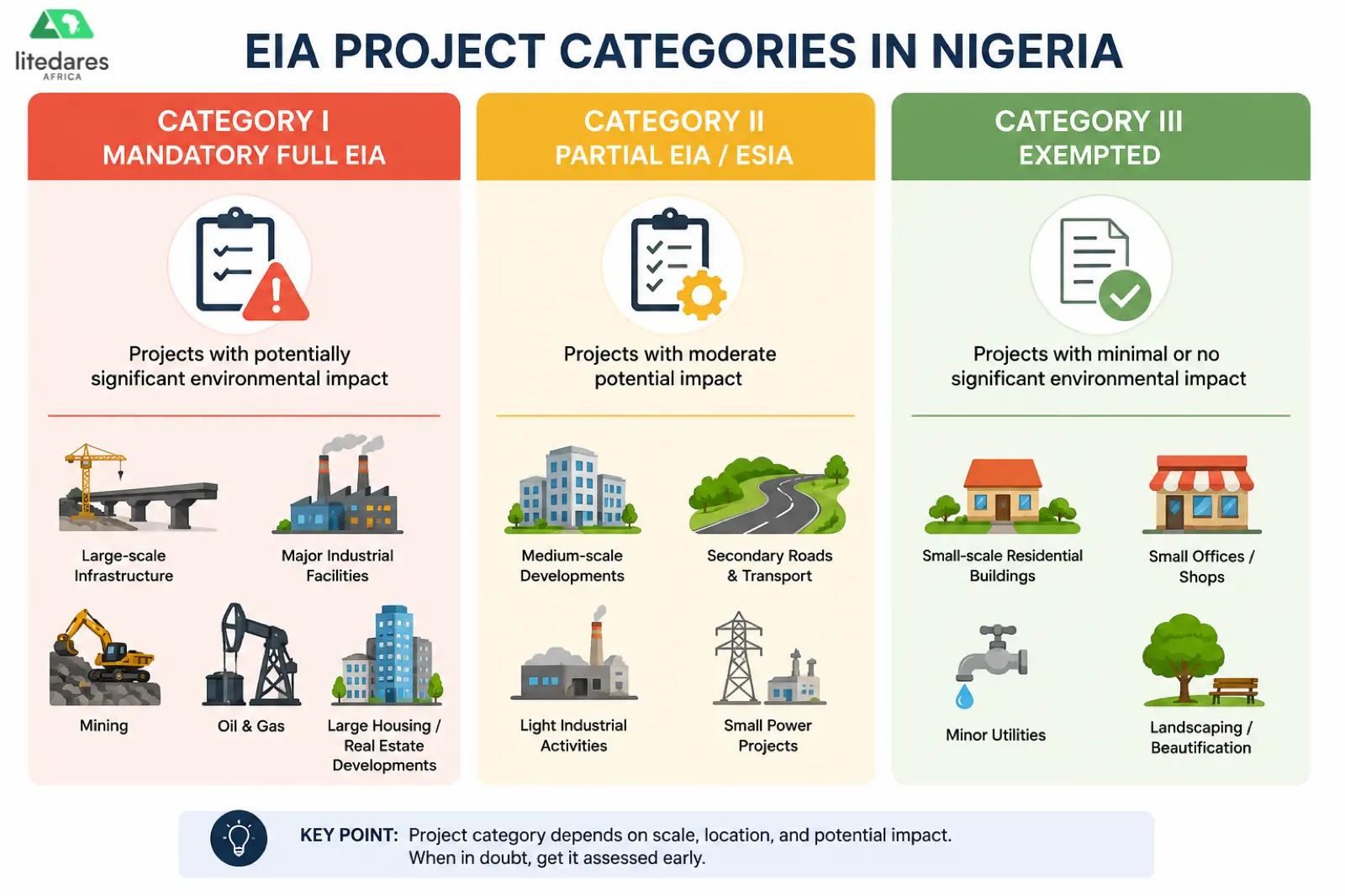
Before we go into the five reasons, it helps to understand who is making the rejection decisions and what they are looking for. Across Africa, EIA approval sits with different bodies by country:
1) Nigeria
NESREA & Federal Ministry of Environment
EIA Act 1992 (amended 2004). Mandatory 21-day public display. NESREA oversees enforcement and compliance. Unaccredited consultants are an immediate rejection trigger.
2) South Africa
DFFE under NEMA
National Environmental Management Act. Rejected reports can be amended and resubmitted but resubmission means months of additional delay and cost.
3) Kenya
NEMA Kenya
Environmental Management and Co-ordination Act. Large-scale projects require full EIA. Inadequate public participation in the LAPSSET corridor project led to a High Court ruling ordering a full EIA licence review and community compensation.
4) Ghana & Others
EPA Ghana & Country-Specific Bodies
Ghana and Zambia are among the few African countries that publish EIA reports in the public domain, raising the transparency bar for what submitted reports must contain.
The 5 Reasons EIA Reports in Africa Keep Getting Rejected
Reason 01
Incomplete or Inadequate Baseline Data
Baseline data is the foundation of every EIA report. It describes the existing state of the environment; air quality, water resources, biodiversity, soil conditions, socioeconomic context before a project begins. Without credible, site-specific baseline data, an EIA report cannot demonstrate what impact the project will actually have. Regulators know this. And they will reject a report that tries to skip past it.
Across Africa, baseline data failure tends to take one of two forms. The first is simply not collecting it, relying instead on secondary data that is outdated, geographically mismatched, or sourced from a different project in a different location. The second and more common failure is collecting social baseline data poorly. Research in South Africa's Limpopo Province found that while physical and ecological baseline information was generally satisfactory in the EIA reports reviewed, social baseline information was consistently inadequate. Regulators flagged this as a significant weakness.
This matters because social baseline data captures how a project will affect the communities living and working around it, their livelihoods, their health, their access to resources. It is the data that is hardest to gather quickly, and the data that affected communities most want to see properly addressed. Skimping on it is a signal to regulators that the assessment was not thorough.
The Fix
Begin baseline data collection at the earliest possible stage of project planning — not after the design is finalised. Use a combination of primary data (collected directly from the site and surrounding communities through surveys, interviews, and field measurements) and secondary data (existing studies, government records, environmental monitoring datasets). Give social baseline data the same rigour and resource allocation as physical and ecological data. And ensure all data is site-specific, current, and verifiable.
Reason 02
Tokenistic or Poorly Documented Public Participation
Public participation is not optional in African EIA processes. In Nigeria, the EIA Act requires a mandatory 21-day public display period during which affected communities can raise objections. In South Africa, NEMA explicitly states that a Basic Assessment Report can be rejected if public participation is insufficient. In Kenya, inadequate public involvement contributed to a High Court ruling against the LAPSSET corridor project, one of East Africa's largest infrastructure programmes, ordering a full review of its EIA licence and the compensation of over 4,000 affected fisherfolk.
Yet despite this regulatory clarity, public participation remains one of the most poorly executed stages of EIA in Africa. Research in South Africa confirms that legislation fails to ensure effective participation of marginalised groups, and that community impact on decisions is minimal when consultation is treated as a box-ticking exercise rather than a genuine engagement process.
The problem is not that developers do not hold community meetings. The problem is that the meetings are poorly advertised, held in formats that exclude marginalised groups, fail to document the concerns that are raised, and most critically fail to show how those concerns were addressed in the final report. Regulators can spot tokenistic participation immediately. And they reject it.
The Fix
Treat public participation as a genuine intelligence-gathering exercise, not a legal formality. Engage affected communities early at the scoping stage before impact predictions are finalized. Use multiple consultation methods: community meetings, written submissions, focus groups, and for affected indigenous or marginalized groups, dedicated engagement sessions. Document every engagement in detail. And critically: show in the final report how each concern raised was considered and addressed. A regulator reading an EIA report wants to see a genuine conversation with the community not a list of attendees at a single meeting.
42/48
42 of 48 EIA reports reviewed by the NCEA in 2022 were missing information essential for decision-making with public participation and mitigation measures consistently the weakest sections. (Source: NCEA Annual Report 2022)
Reason 03
Weak, Vague, or Generic Mitigation Measures
This is the section of an EIA report that most directly determines whether a project gets approved and it is consistently the worst-performing section in African EIA reports. A peer-reviewed study (Choji et al., 2022) evaluating 80 EIA reports in Nigeria's telecoms infrastructure sector found that 100% of reports received D to F ratings for impact identification and mitigation, the lowest possible ratings identifying multiple weaknesses that were not project-specific and would not meaningfully reduce the impacts they claimed to address.
Weak mitigation looks like this: "The project will implement appropriate measures to minimize dust during construction." That sentence tells a regulator nothing. What measures? How will they be implemented? By whom? At what point in construction? How will compliance be monitored and verified? Without answers to these questions, the mitigation measure is meaningless and the regulator will say so.
Strong mitigation is specific, measurable, tied directly to a specific identified impact, assigned to a responsible party, and embedded in a costed Environmental Management Plan (EMP) with a monitoring schedule. It also addresses the analysis of project alternatives demonstrating that the developer considered other options and can justify why the proposed approach is the least environmentally harmful viable choice.
The Fix
For every significant impact identified in your EIA report, write a mitigation measure that answers: What will be done? Who is responsible for doing it? When during the project lifecycle will it be implemented? How will compliance be monitored and at what frequency? What is the target outcome? Include these in a detailed Environmental Management Plan (EMP) that forms part of the EIA report. And always include a genuine alternatives analysis, regulators want to see that the developer considered other approaches, not just the one that is most convenient.
Reason 04
Copy-Pasted Reports That Lack Site-Specific Analysis
This is perhaps the most damaging practice in African EIA consulting and it is more widespread than the industry likes to admit. Research on EIA failures specifically names copy-pasting as a problem: "Some consultants copy-paste EIA reports and environmental audits." A report prepared for a road project in Abuja is recycled for a housing development in Port Harcourt. The project description changes. The environmental context does not. The mitigation measures do not. The baseline data certainly does not.
Regulators particularly experienced reviewers at NESREA, DFFE, or NEMA Kenya recognise recycled content. The environmental context of each project is unique: the local ecosystem, the community demographics, the proximity to sensitive receptors, the existing pollution baseline, the specific climate risks of the site. A report that does not reflect this uniqueness signals to the regulator that the assessment was not conducted, it was fabricated. And it gets rejected.
Beyond regulatory rejection, a copy-pasted EIA report creates a liability for the developer. If a project causes environmental harm that the EIA claimed to have assessed and mitigated but did not actually assess, the legal and financial consequences fall directly on the project owner.
The Fix
Every EIA report must be site-specific, project-specific, and current. Your consultant should begin with a genuine scoping exercise that defines what is unique about this particular project, this particular site, and the communities and ecosystems that surround it. Resist the pressure to cut time and cost by reusing previous reports. The cost of a thorough, original EIA report is always less than the cost of a rejection, a resubmission, and the project delay that follows.
Reason 05
Unaccredited or Unqualified Consultants
In Nigeria, EIA reports must be prepared by consultants who are accredited and registered with NESREA under the EIA Act. Using an unaccredited consultant is one of the fastest routes to rejection and one of the most avoidable. Yet it happens regularly, particularly on projects where developers are trying to reduce costs or move quickly.
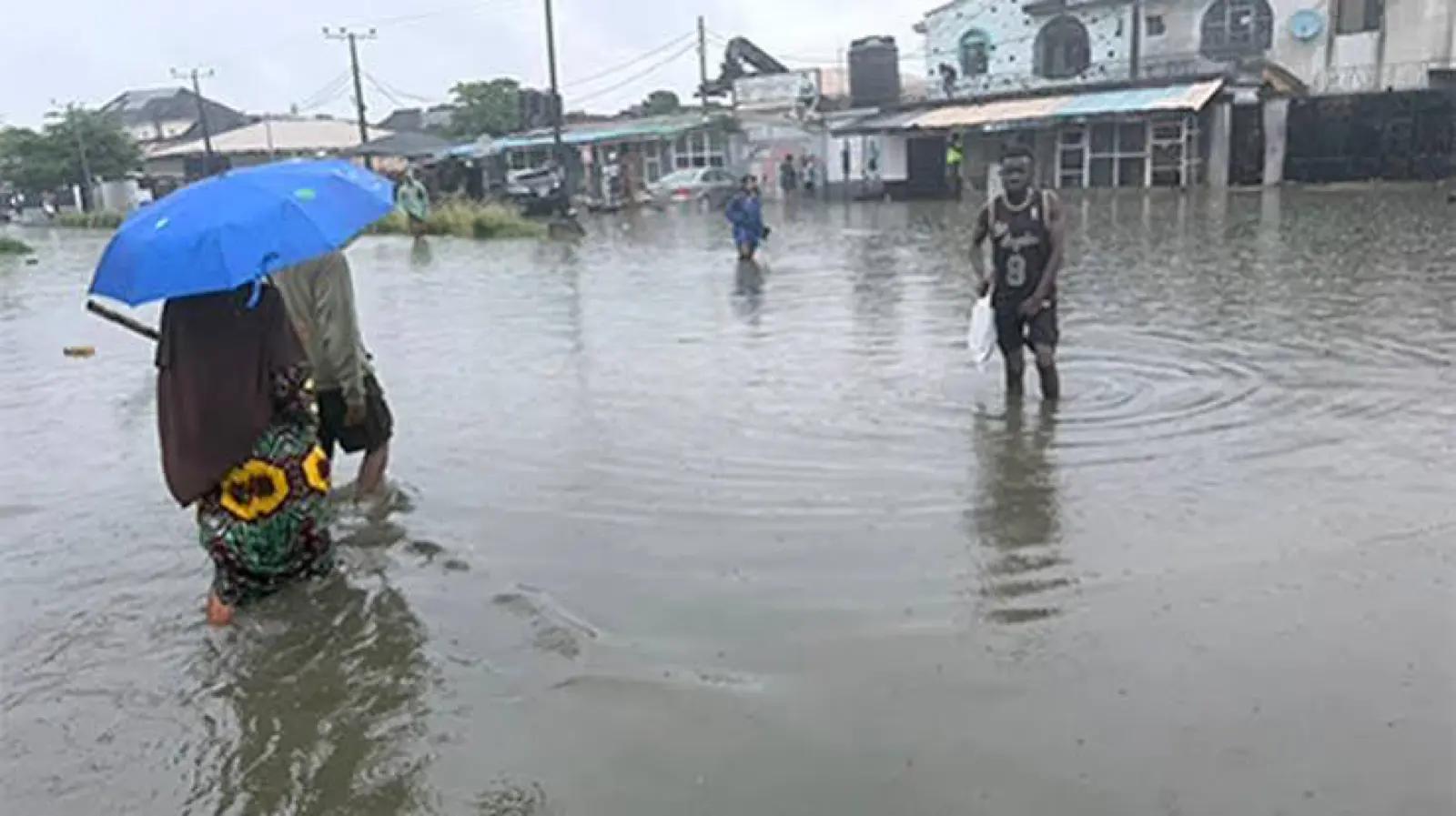
Beyond accreditation, there is the wider problem of using generalist environmental consultants who lack the specific expertise the project requires. An EIA for a coastal development in Lagos requires consultants with expertise in coastal hydrology, tidal flooding risk, and marine ecology. An EIA for a mining project in the Niger Delta requires expertise in oil spill risk, community health impacts, and the intersection of environmental and petroleum industry regulation. A generalist with a generic EIA template is not equipped for either.
Research consistently highlights limited local capacity and weak technical expertise as key barriers to quality EIA practice across sub-Saharan Africa. The solution is not to use whoever is cheapest or most available. It is to choose consultants with both the regulatory credentials and the specific technical depth that the project demands.
The Fix
Before engaging an EIA consultant in Nigeria, confirm their NESREA accreditation. In South Africa, confirm they are a registered Environmental Assessment Practitioner (EAP). In Kenya, confirm NEMA registration. Beyond credentials, evaluate their specific experience with your project type and the specific ecosystem and community context of your site. Ask for examples of EIA reports they have prepared for similar projects. And ask directly: how many of those reports were approved without rejection or resubmission?
What an Approvable EIA Report in Africa Must Contain
Before your next EIA report is submitted, run it against this checklist. Every item must be present and every item must be addressed with site-specific rigour, not generic language:
- Comprehensive, site-specific baseline data — physical, ecological, and social, collected through both primary and secondary methods, current and verifiable.
- Documented public participation — evidence of genuine, multi-method community engagement, with a record of every concern raised and how it was addressed.
- Specific, measurable mitigation measures — each tied to a specific identified impact, assigned to a responsible party, with a monitoring schedule and target outcome.
- Analysis of project alternatives — demonstrating why the proposed approach is the least environmentally harmful viable option.
- A costed Environmental Management Plan (EMP) — an actionable implementation and monitoring framework that regulators can hold the developer accountable to.
- Cumulative impact assessment — addressing not just the direct impacts of this project, but how they interact with other existing and planned developments in the area.
- Regulatory compliance documentation — evidence that the report meets the specific requirements of the relevant regulatory body: NESREA in Nigeria, DFFE under NEMA in South Africa, NEMA in Kenya.
- An accredited, qualified consultant — confirmed registration and accreditation with the relevant regulatory authority, and demonstrable experience with your specific project type.
The Real Cost of Getting It Wrong
An EIA rejection is not just an administrative inconvenience. In practice, it means a resubmission process that can take months. It means project delays that compound financing costs. It means relationships with regulators that start and sometimes permanently remain adversarial. And in the most serious cases, it means projects that cannot proceed at all.
In Nigeria, projects that proceed without EIA approval face legal consequences under the EIA Act including the possibility of project shutdown and financial penalties. In South Africa, NEMA enforcement has teeth. In Kenya, high-profile project delays attributable to EIA failures have attracted national and international scrutiny that no developer wants attached to their project.
The investment in a thorough, rigorous, site-specific EIA report prepared by an accredited consultant who knows exactly what regulators in your market are looking for is always less than the cost of getting it wrong. Always.
At Litedares Africa, environmental impact assessment is not a service we offer as an afterthought to our green building consulting practice. It is a discipline we apply with the same rigour, the same Africa-specific expertise, and the same commitment to getting it right the first time because for your project, the first time is the only time that matters.
Work with Litedares Africa
Need an EIA report that gets approved not rejected? BOOK A FREE CONSULTATION or CONTACT US